
What is SIF?
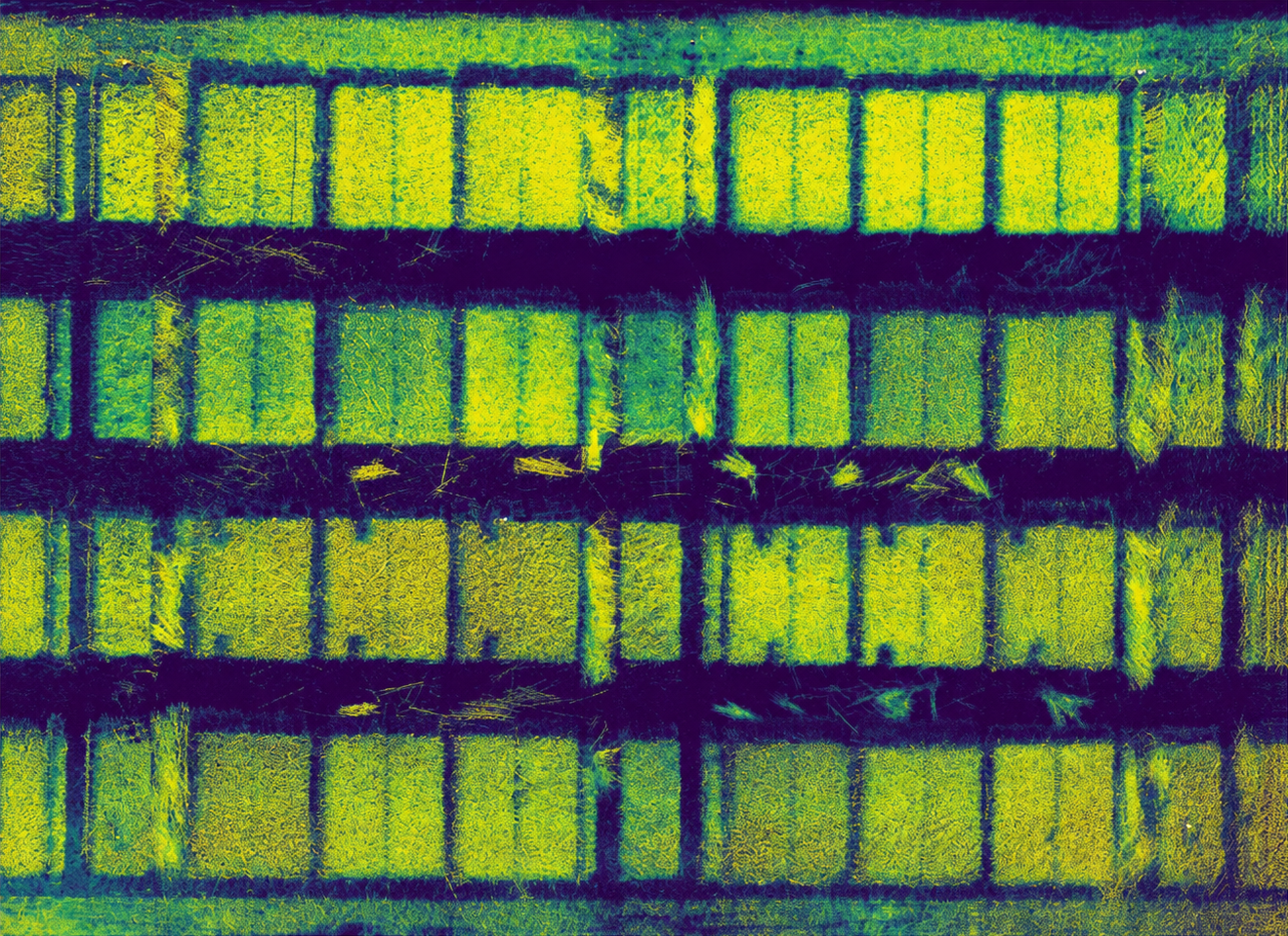
Every plant emits a faint glow during photosynthesis. The light is far too weak for the human eye to see, but it comes directly from the plant's photosynthetic machinery. This glow is called chlorophyll fluorescence, and it is the most direct optical indicator of active photosynthesis and a reliable measure of plant health.
Five pathways for sunlight
For decades, this signal was studied mainly indoors, in closed laboratories where artificial light sources were used to probe plant physiology. That research established chlorophyll fluorescence as a dependable window into photosynthesis across timescales from minutes to whole seasons [5]. The same light emission also occurs outdoors. Under natural sunlight, plants fluoresce passively, with no external light source required. This passive signal is called Solar-Induced Fluorescence, or SIF, and it provides insight into how plants function under real-world conditions.
When sunlight reaches a leaf, it can take five different pathways. Most incoming light never even enters the plant, while only a tiny fraction is ultimately re-emitted as fluorescence:
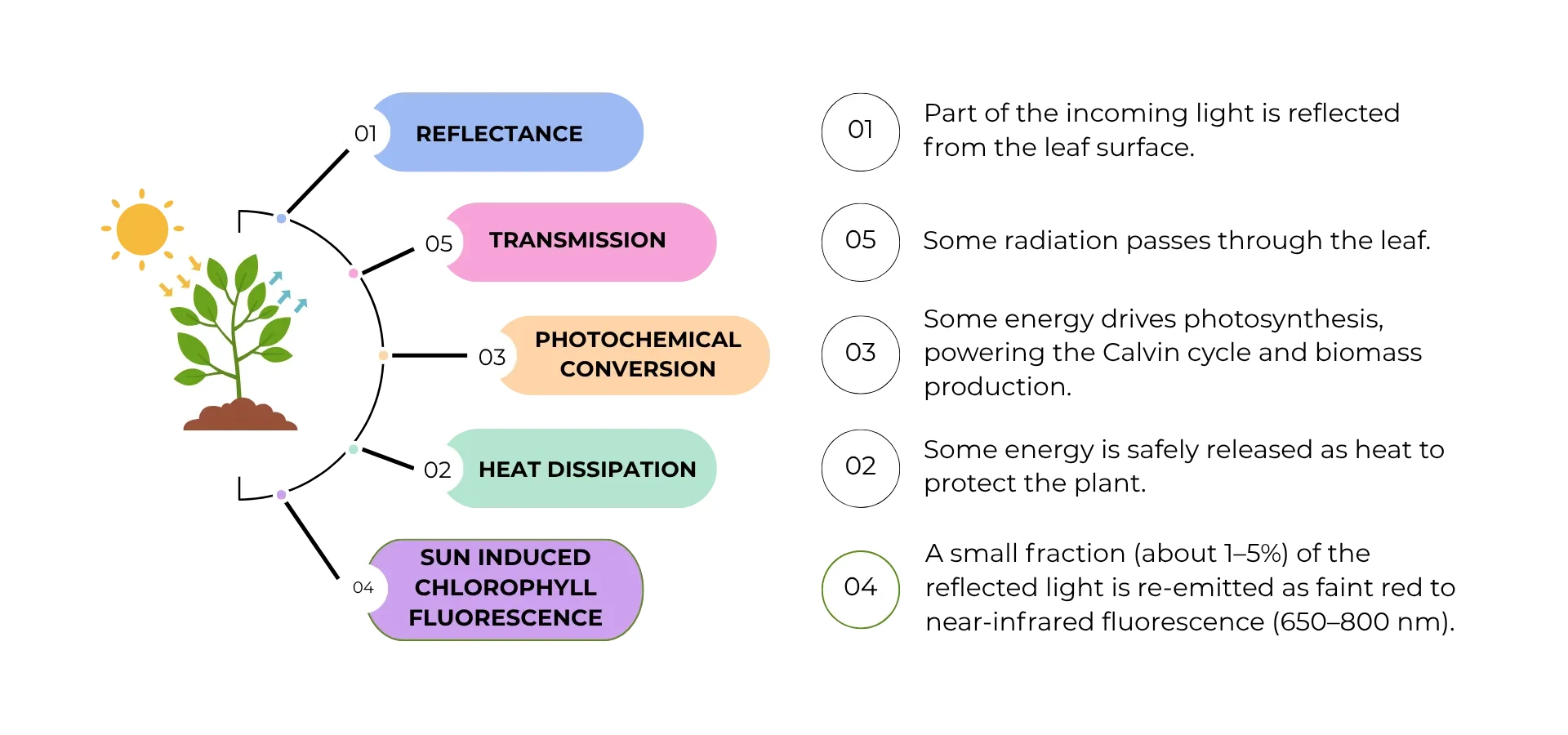
- 1.Reflectance: the largest part of incoming light is simply reflected off the leaf surface without being absorbed. This reflected light is the dominant signal that remote sensors pick up when observing vegetation.
- 2.Transmission: some radiation passes straight through the leaf and reaches deeper canopy layers below, where it may be re-absorbed or reflected.
- 3.Photochemical conversion: the absorbed portion of light is captured by chlorophyll and drives the light reactions of photosynthesis. This powers the Calvin cycle, producing the sugars and biomass the plant needs to grow. It is also the pathway that SIF is most directly linked to.
- 4.Heat dissipation: not all absorbed light can be used for photosynthesis. Energy that cannot be processed productively is released as heat through a protective mechanism called non-photochemical quenching. This safety valve scales up whenever the plant is exposed to excess light or stress.
- 5.Solar-induced fluorescence (SIF): a small fraction of absorbed light, roughly 1 to 5 percent, is re-emitted as faint red to near-infrared fluorescence between 640 and 800 nm. This emission varies depending on how efficiently the plant is conducting photosynthesis and is the signal we are interested in.
Three of those pathways draw on the same pool of absorbed energy and therefore compete with one another: photochemistry, heat dissipation, and fluorescence. Under optimal conditions a leaf channels roughly 82 percent of the light it absorbs into photochemistry, and the rest is lost as heat or re-emitted as fluorescence [1]. Because these three pathways compete, the share re-emitted as SIF is never a fixed quantity. When photosynthesis slows down, for example because a stressed plant closes its stomata and its carbon dioxide supply falls, the balance shifts and the SIF signal changes with it [2]. This competition is the physical reason SIF carries information about plant function rather than plant structure.
A two-peak light signal from the photosynthetic machinery
SIF is emitted directly from the photosynthetic machinery inside the leaf, specifically from the two protein complexes that drive the light reactions, Photosystem II and Photosystem I. Each system contributes to a different part of the emitted fluorescence spectrum. The result is a characteristic two-peak shape of the light signal, called SIF (see figure below): a smaller peak in the red near 685 nm (F685), emitted almost entirely by Photosystem II, and a larger, broader peak in the far-red near 740 nm (F740), to which both photosystems contribute [1][3].
This double-peak spectrum is a fingerprint of active photosynthesis. Most of the regulatory machinery that protects a plant under stress sits within Photosystem II (685 nm). Changes in its functional status are therefore reflected directly in the intensity of the red fluorescence signal [1][3]. The broader peak at 740 nm, by contrast, integrates the activity of both photosystems and reflects the overall photosynthetic output of the leaf.
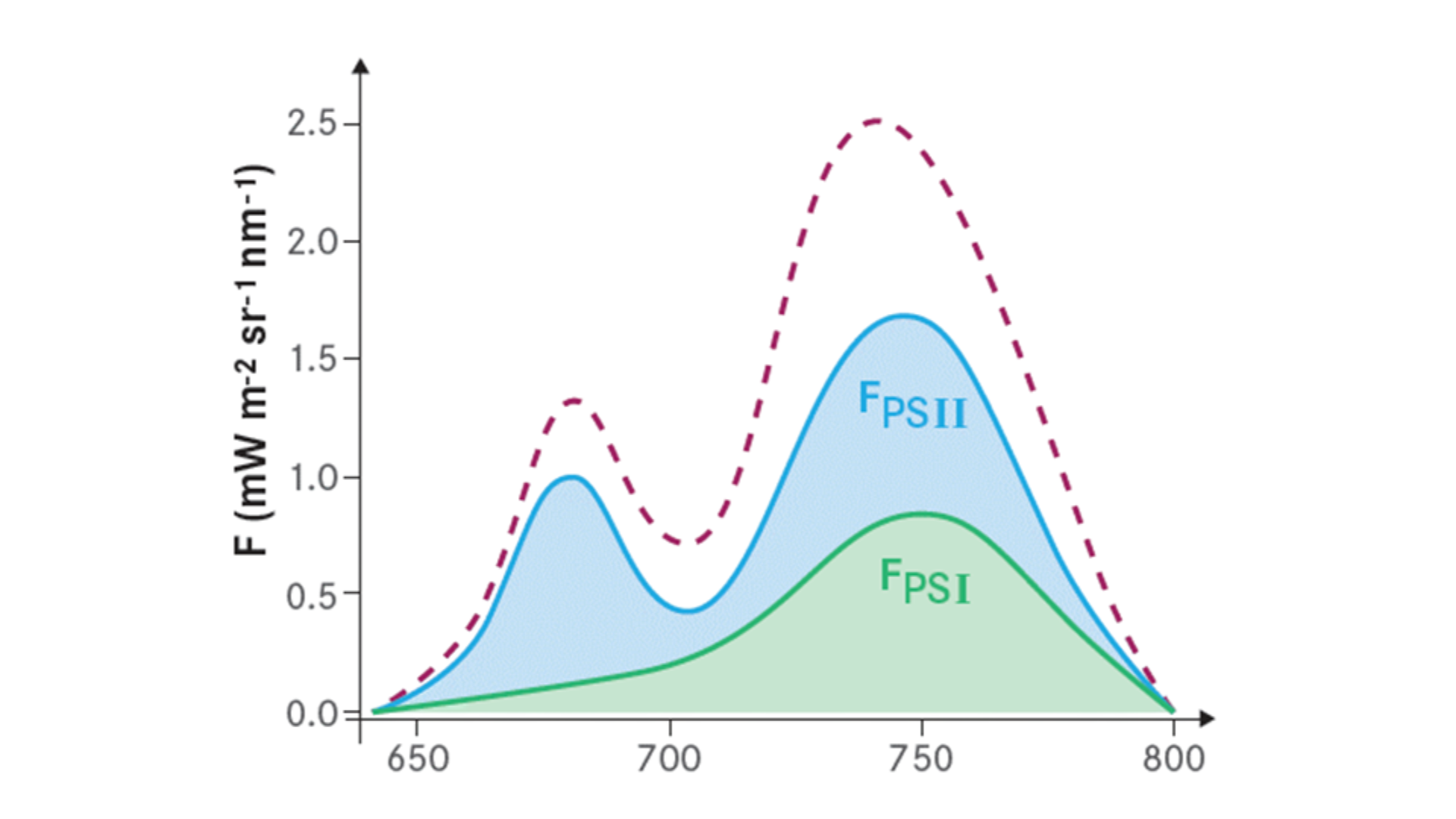
Decades of plant physiology research have established that chlorophyll fluorescence is a reliable probe of how Photosystem II is operating [3][4], and that the signal tracks photosynthesis across timescales from minutes to whole seasons [5]. Which is why SIF has become one of the most promising traits in modern plant science [6].
Why SIF is different from greenness
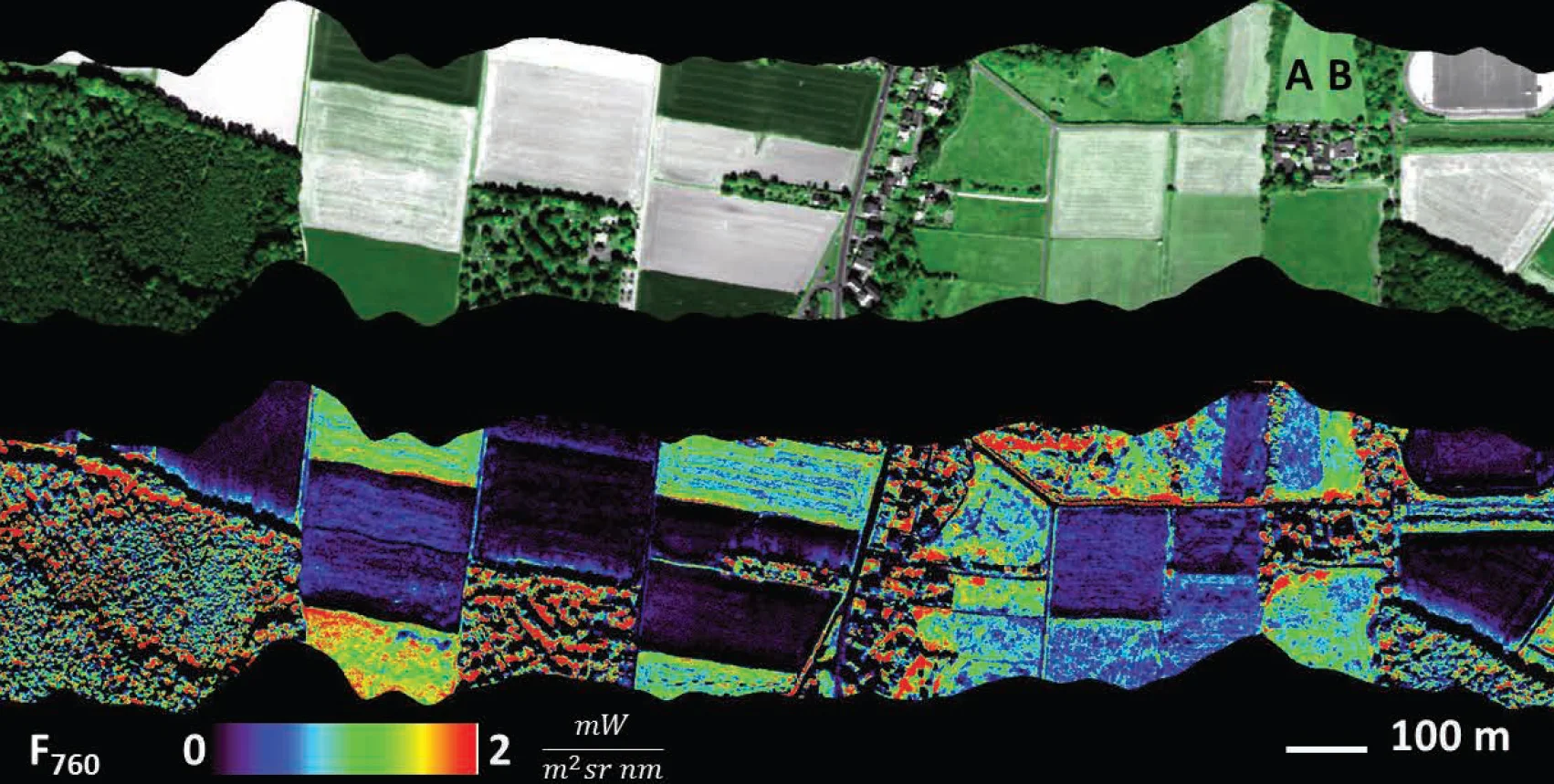
Because fluorescence is directly linked to how plants regulate the light they absorb, it serves as a quantitative indicator of photosynthetic efficiency, carbon fixation, and plant stress [6]. Vegetation indices such as NDVI measure greenness, which reflects the structure and pigment content of a canopy. Reflectance can show how much canopy is present and what condition its pigments are in, which is a measure of potential photosynthesis. SIF instead reveals how actively that canopy is converting sunlight into biomass right now [1].
The practical consequence is timing. A drought-stressed plant can stay perfectly green for days or weeks while its photosynthesis is already collapsing. Greenness will not show this. The fluorescence signal will, because it is emitted by the process that is failing.
One caveat is worth stating clearly. The link between SIF and photosynthesis is mechanistic, but it is not a fixed ratio. It is modulated by non-photochemical quenching, the heat-dissipation safety valve that competes with both photochemistry and fluorescence [2]. Interpreting SIF correctly means treating it as a strong physiological signal, not as a perfectly linear stand-in for photosynthetic rate.
How SIF is measured
Detecting SIF is challenging. The emission is faint compared to the surrounding sunlight. The only way to extract the signal lies in the so-called oxygen absorption bands.
The solar spectrum contains dark lines, known as Fraunhofer lines, where incoming sunlight is naturally weakened by absorption. The atmosphere adds further dark features, in particular the oxygen absorption bands near 760 nm and 687 nm. Inside these dark windows, reflected sunlight is locally suppressed, allowing the plant's own fluorescence emission to stand out and become measurable. This family of retrieval methods is known as Fraunhofer Line Discrimination [7].
The same physics underpins the European Space Agency's FLEX satellite mission, which will map vegetation fluorescence globally from orbit. FLEX is designed for large-scale observation, with each pixel covering roughly 300 × 300 metres and repeated acquisitions of the same location occurring over longer intervals depending on orbit and cloud conditions.
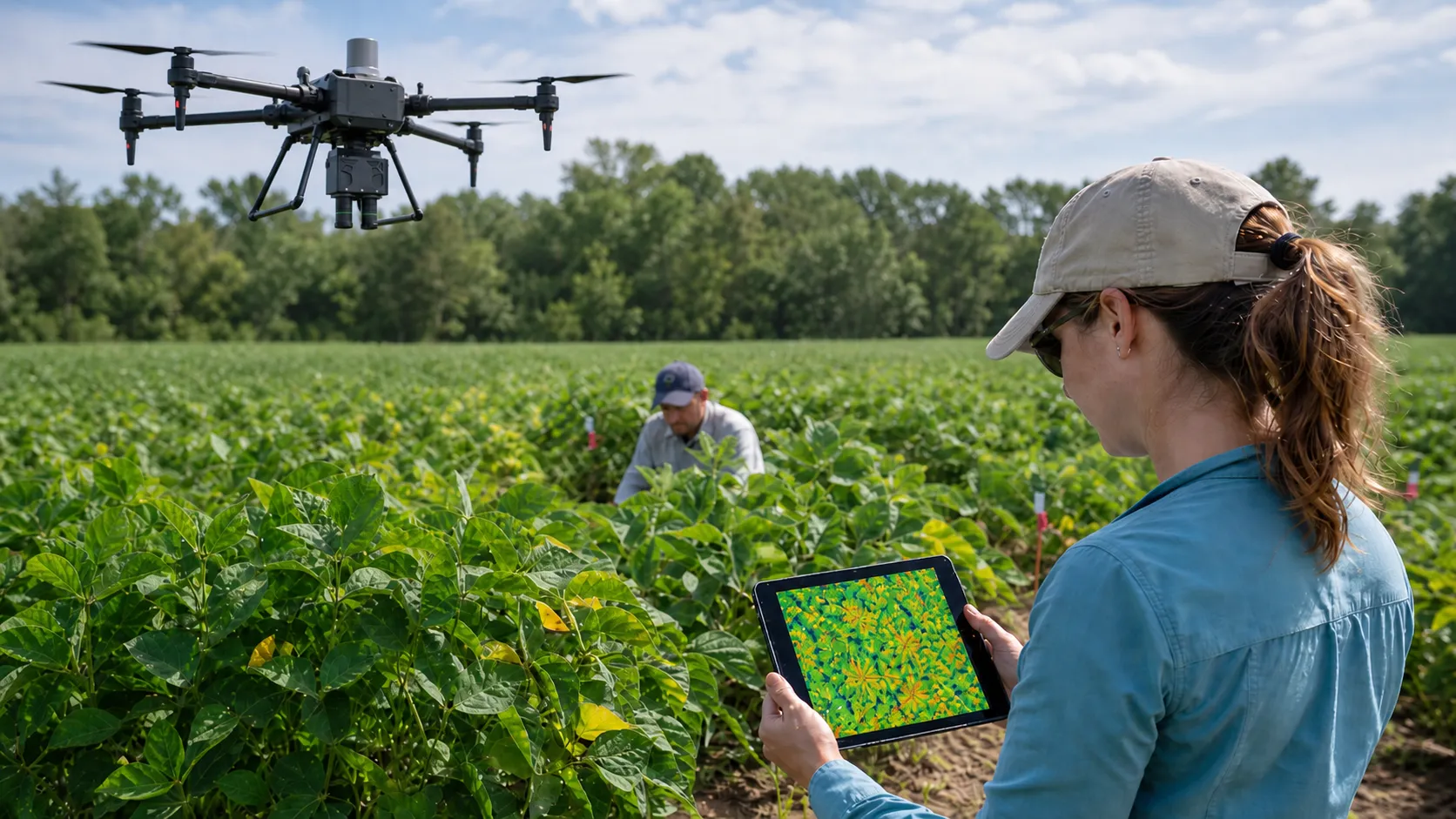
For a long time the measurements on field scale needed laboratory-grade spectrometers mounted on large platforms. SIFcam brings the same method into a compact, field-deployable dual-camera imaging system, measuring SIF in absolute physical units at high spatial resolution from drone or tower deployments.
- 1.ESA (2015). Report for Mission Selection: FLEX, ESA SP-1330/2 (2 volume series), European Space Agency, Noordwijk, The Netherlands.
- 2.Porcar-Castell, A., Tyystjärvi, E., Atherton, J., van der Tol, C., Flexas, J., Pfündel, E. E., et al. (2014). Linking chlorophyll a fluorescence to photosynthesis for remote sensing applications: mechanisms and challenges. Journal of Experimental Botany, 65(15), 4065–4095. https://doi.org/10.1093/jxb/eru191
- 3.Baker, N. R. (2008). Chlorophyll Fluorescence: A Probe of Photosynthesis In Vivo. Annual Review of Plant Biology, 59, 89–113. https://doi.org/10.1146/annurev.arplant.59.032607.092759
- 4.Murchie, E. H., & Lawson, T. (2013). Chlorophyll fluorescence analysis: a guide to good practice and understanding some new applications. Journal of Experimental Botany, 64(13), 3983–3998. https://doi.org/10.1093/jxb/ert208
- 5.Magney, T. S., Bowling, D. R., Logan, B. A., Grossmann, K., Stutz, J., Blanken, P. D., et al. (2019). Mechanistic evidence for tracking the seasonality of photosynthesis with solar-induced fluorescence. Proceedings of the National Academy of Sciences, 116(24), 11640–11645. https://doi.org/10.1073/pnas.1900278116
- 6.Porcar-Castell, A., Malenovský, Z., Magney, T., Van Wittenberghe, S., Fernández-Marín, B., Maignan, F., et al. (2021). Chlorophyll a fluorescence illuminates a path connecting plant molecular biology to Earth-system science. Nature Plants, 7(8), 998–1009. https://doi.org/10.1038/s41477-021-00980-4
- 7.Meroni, M., Rossini, M., Guanter, L., Alonso, L., Rascher, U., Colombo, R., & Moreno, J. (2009). Remote sensing of solar-induced chlorophyll fluorescence: Review of methods and applications. Remote Sensing of Environment, 113(10), 2037–2051. https://doi.org/10.1016/j.rse.2009.05.003
- Is SIF the same as the chlorophyll fluorescence measured in a laboratory? +
- It is the same physical phenomenon, but it is quantified differently. Laboratory instruments typically use a saturating light pulse to actively probe the fluorescence quantum yield ΦF, the efficiency with which absorbed light is re-emitted as fluorescence. SIF is the passive emission under natural sunlight, with no external light source required. Because of this, ΦF is an intrinsic physiological property of the plant, whereas SIF also reflects how much sunlight reaches and is absorbed by the canopy (see the question on the difference between ΦF and SIF below).
- Can SIF be measured at night? +
- No. SIF needs sunlight to excite the chlorophyll, so it is a daytime measurement that follows the daily cycle of incoming radiation. Active chlorophyll fluorescence, by contrast, can be measured at any time because the instrument supplies its own excitation light. Curiously, plants do keep emitting a faint afterglow (called delayed fluorescence) for seconds to minutes after the light is switched off, but it is far too weak and short to be useful for remote sensing.
- What units is SIF reported in? +
- Most commonly milliwatts per square metre per nanometre per steradian (mW m⁻² nm⁻¹ sr⁻¹). The value is reported inside one of the two atmospheric oxygen absorption bands used for retrieval: 760 nm, the O₂-A band near the far-red emission peak at 740 nm, or 687 nm, the O₂-B band near the red emission peak at 685 nm.
- Can you see SIF with the naked eye? +
- No. SIF accounts for only about 1 to 5 percent of the light a leaf absorbs, and it is emitted at wavelengths where reflected sunlight is orders of magnitude brighter. The eye cannot separate the two. Detecting SIF requires very narrow spectral resolution inside the dark Fraunhofer or oxygen absorption lines, where the reflected sunlight is locally weakened and the fluorescence stands out.
- What is the difference between ΦF and SIF? +
- ΦF, or fluorescence quantum yield, describes how efficiently absorbed light is converted into fluorescence. It is an intrinsic physiological property of the plant and reflects the internal state of photosynthesis. SIF, or solar-induced fluorescence, is the fluorescence signal that actually leaves the plant and can be measured remotely. It is closely related to ΦF, but also reflects how much sunlight reaches and is absorbed by the plant. In simple terms, ΦF describes the efficiency of fluorescence production, while SIF describes the measurable fluorescence emitted under real sunlight. Because SIF depends on both plant physiology and illumination, it is usually interpreted together with incoming light conditions, especially when comparing measurements across different times, days, or field sites.
SIF vs Other Metrics
7 minNDVI and related indices describe how a canopy looks. SIF measures what it is doing. The difference matters most exactly when it matters most, under stress.
How SIFcam Works
7 minSIFcam measures solar-induced fluorescence in the oxygen A-band from a drone, and turns a flight of snapshot images into a single calibrated SIF map.