
Early Stress Detection
Plant stress does not appear all at once. It unfolds in stages, and the earliest stages are invisible to the eye and to conventional imagery. Because SIF is emitted through photosynthesis, it changes the moment photosynthesis does, well before any visible symptom appears. That is what makes it an early-warning signal.
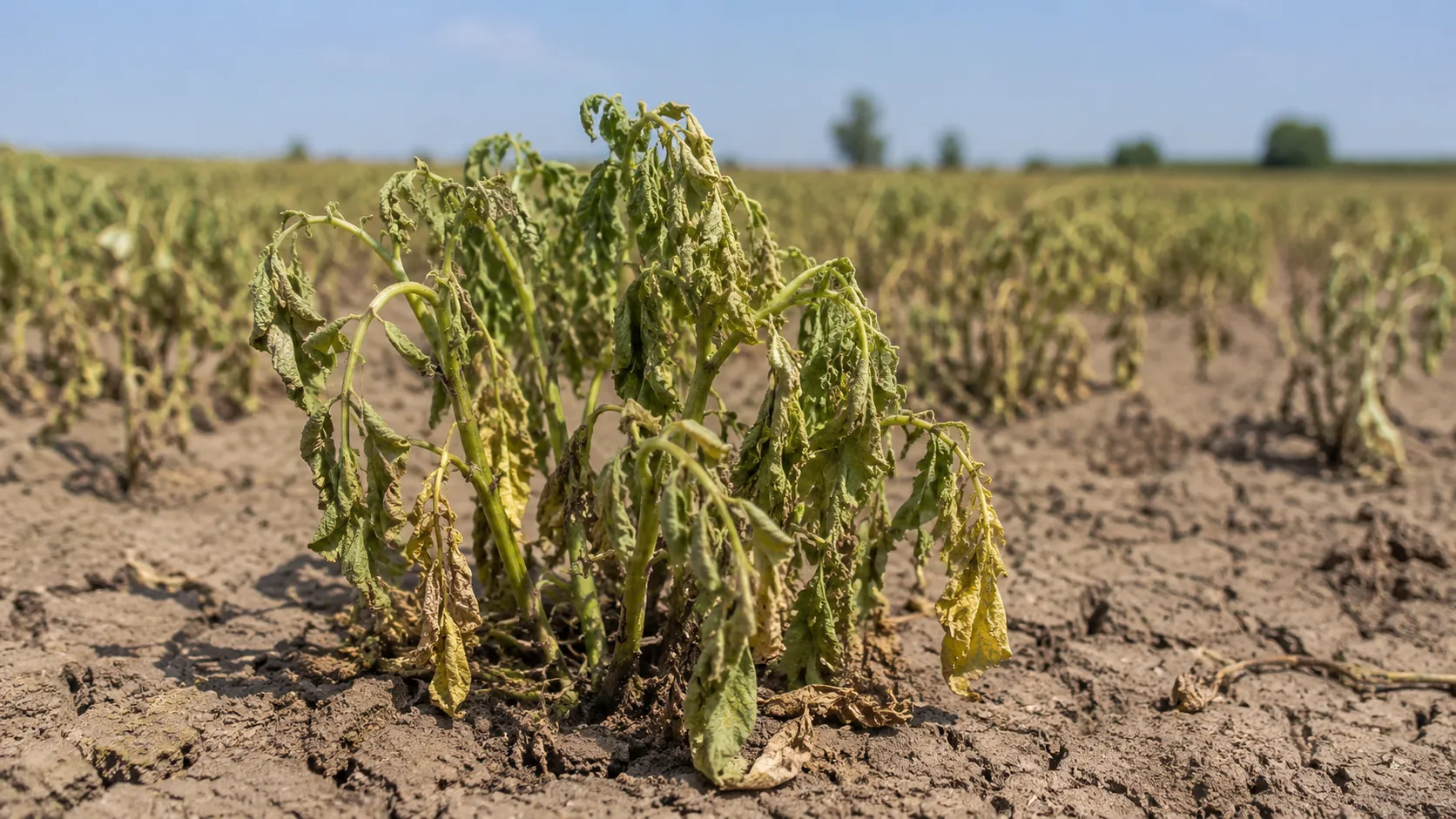
The stress cascade
When a crop comes under stress, the damage develops as a sequence. Take drought. Within minutes of water becoming limiting, the leaf stomata close. Within hours, photosynthesis slows down. Within days, cells begin to take lasting damage. Only after weeks do visible symptoms appear: wilting, yellowing, thinning stands.
Conventional monitoring, whether the human eye, RGB imagery or reflectance indices such as NDVI, detects the last stage in that sequence, because it depends on visual canopy changes. SIF detects the first stage, because it is emitted by the photosynthetic reactions that slow down at the very start [1][2].
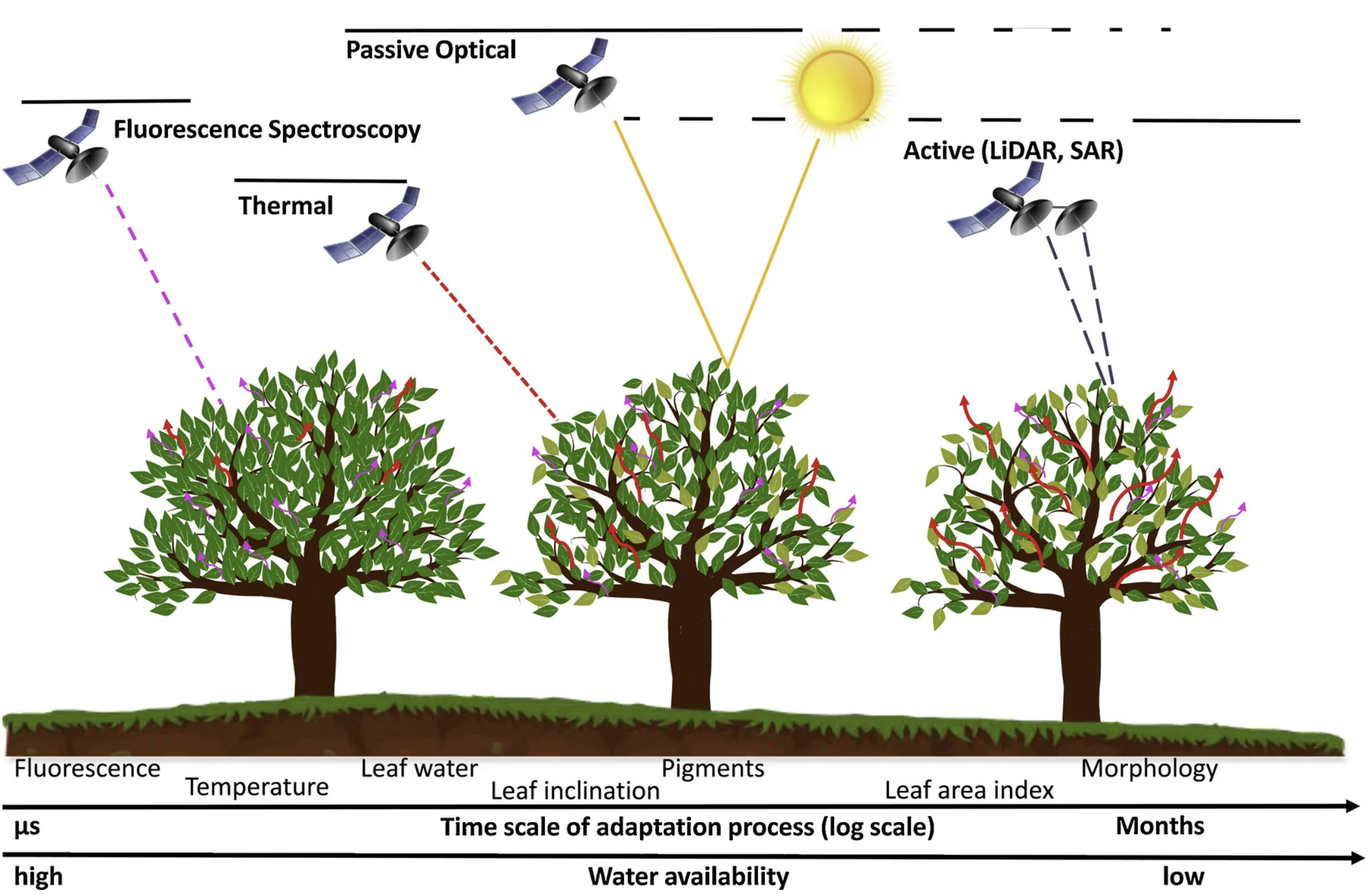
The gap between the moment function changes and the moment appearance changes is the window in which a problem can still be corrected. Detecting drought, nutrient stress or disease early enough to act is what turns monitoring into prevention. The figure below places the main remote sensing methods on that timeline: fluorescence registers the earliest physiological adjustments, thermal and passive optical signals follow as water content and pigments change, and the structural indices react only once the canopy itself has visibly changed.
Three stages of drought stress
Looking more closely at drought, plant scientists describe three stages, and SIF behaves differently in each [3].
In the first stage, the dynamic response, the leaf stomata close, transpiration and carbon dioxide uptake fall, and the plant rebalances the flow of energy inside its photosynthetic machinery. These adjustments happen many times in a normal day, and a healthy plant accommodates them without lasting loss.
In the second stage, acute stress, water stays limited. The stomata remain closed, the plant has to safely dissipate light energy it can no longer use, and energy is redistributed between its two photosystems. This is the stage at which yield is genuinely at risk.
In the third stage, chronic stress, the damage becomes structural: pigments and tissues are harmed, and leaves die and are shed. The important point for monitoring is that the fluorescence signal changes well before this irreversible damage, and before any associated change in canopy reflectance [3]. SIF reports the problem while it can still be acted on.
Why early detection matters
An early signal is only useful if it leaves time to respond. In a field, that means adjusting irrigation, fertilisation or crop protection before the loss is locked in. The lead time SIF provides, often days to weeks ahead of visible symptoms, is exactly the window in which those interventions are still effective and still affordable.
For plant breeders and seed companies the value is different but just as real. Comparing how genotypes respond to stress, before they diverge visually, makes it possible to rank candidates by physiological resilience rather than waiting for an end-of-season yield figure.
Because SIFcam delivers a calibrated map rather than a single reading, early stress also shows up spatially. The patches of a field that begin to struggle first can be seen, and treated, on their own, instead of managing a whole field to its worst corner.
Beyond drought: heat, nutrients and disease
Drought is the clearest example, but the same logic applies to other stresses. A meta-analysis of steady-state chlorophyll fluorescence found measurable responses to water, temperature and nitrogen stress, with the sensitivity differing from one stressor to another [4]. During heat waves, SIF has been shown to track productivity in real time [5].
Biotic stress fits the pattern too. Pathogen infection and pest feeding disrupt photosynthesis before they produce visible lesions, and chlorophyll fluorescence imaging is an established tool for detecting that disruption early [6].
One honest caveat: SIF is a powerful early indicator, but it is not a perfectly linear gauge under every extreme. Under severe heat-wave conditions the usually tight relationship between SIF and productivity can break down [7]. Early detection works best when SIF is read as a sensitive warning signal and interpreted alongside the conditions in the field.
- 1.Damm, A., Paul-Limoges, E., Kükenbrink, D., Bachofen, C., & Morsdorf, F. (2022). Response times of remote sensing measured sun-induced chlorophyll fluorescence, surface temperature and vegetation indices to evolving soil water limitation in a crop canopy. Remote Sensing of Environment, 273, 112957. https://doi.org/10.1016/j.rse.2022.112957
- 2.Porcar-Castell, A., Tyystjärvi, E., Atherton, J., van der Tol, C., Flexas, J., Pfündel, E. E., et al. (2014). Linking chlorophyll a fluorescence to photosynthesis for remote sensing applications: mechanisms and challenges. Journal of Experimental Botany, 65(15), 4065–4095. https://doi.org/10.1093/jxb/eru191
- 3.ESA (2015). Report for Mission Selection: FLEX. ESA SP-1330/2, European Space Agency, Noordwijk, The Netherlands.
- 4.Ač, A., Malenovský, Z., Olejníčková, J., Gallé, A., Rascher, U., & Mohammed, G. (2015). Meta-analysis assessing potential of steady-state chlorophyll fluorescence for remote sensing detection of plant water, temperature and nitrogen stress. Remote Sensing of Environment, 168, 420–436. https://doi.org/10.1016/j.rse.2015.07.022
- 5.Wohlfahrt, G., Gerdel, K., Migliavacca, M., Rotenberg, E., Tatarinov, F., Müller, J., et al. (2018). Sun-induced fluorescence and gross primary productivity during a heat wave. Scientific Reports, 8, 14169. https://doi.org/10.1038/s41598-018-32602-z
- 6.Pérez-Bueno, M. L., Pineda, M., & Barón, M. (2019). Phenotyping Plant Responses to Biotic Stress by Chlorophyll Fluorescence Imaging. Frontiers in Plant Science, 10, 1135. https://doi.org/10.3389/fpls.2019.01135
- 7.Martini, D., Sakowska, K., Wohlfahrt, G., Pacheco-Labrador, J., van der Tol, C., Porcar-Castell, A., et al. (2022). Heatwave breaks down the linearity between sun-induced fluorescence and gross primary production. New Phytologist, 233(6), 2415–2428. https://doi.org/10.1111/nph.17920
- How much earlier than NDVI can SIF detect stress? +
- Typically days to weeks, depending on the crop and the stressor. In controlled drought experiments SIF has begun to change even before canopy surface temperature, which is itself a fast-responding stress proxy.
- Which stresses can SIF detect? +
- Drought and water stress, heat, nutrient deficiency, and early disease and pest pressure all disrupt photosynthesis and are reflected in SIF. Sensitivity varies by stressor, so SIF is best used as a sensitive early warning rather than a single diagnosis.
- Does every early SIF change mean trouble? +
- No. Healthy plants make short-term photosynthetic adjustments throughout the day. A genuine stress signal is a sustained change, which is why repeated measurements and calibrated maps matter for telling the two apart.
- Can early stress be located within a field? +
- Yes. A SIFcam orthomosaic shows where in a field stress is developing, so an intervention can be targeted to the affected patches rather than applied uniformly.
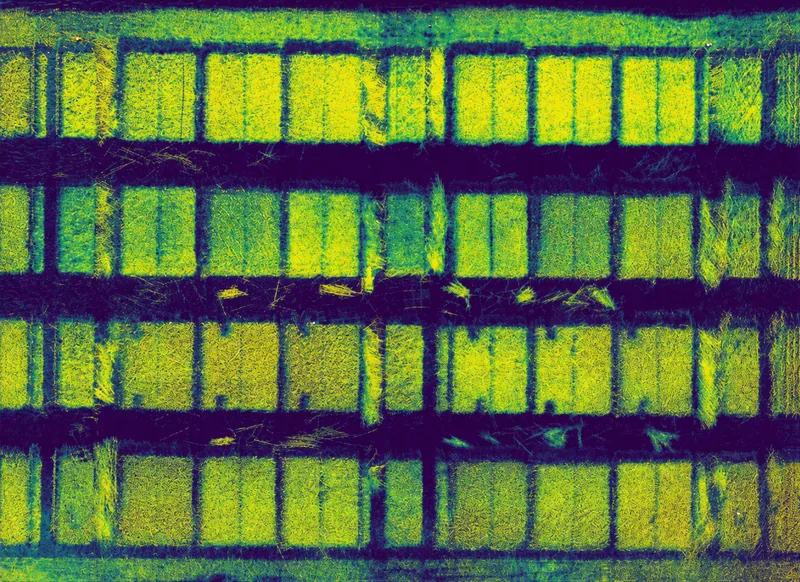
What is SIF?
7 minSolar-Induced Fluorescence is the faint light that every photosynthesising leaf emits under sunlight. It is the most direct optical signal of active photosynthesis measurable from a distance.
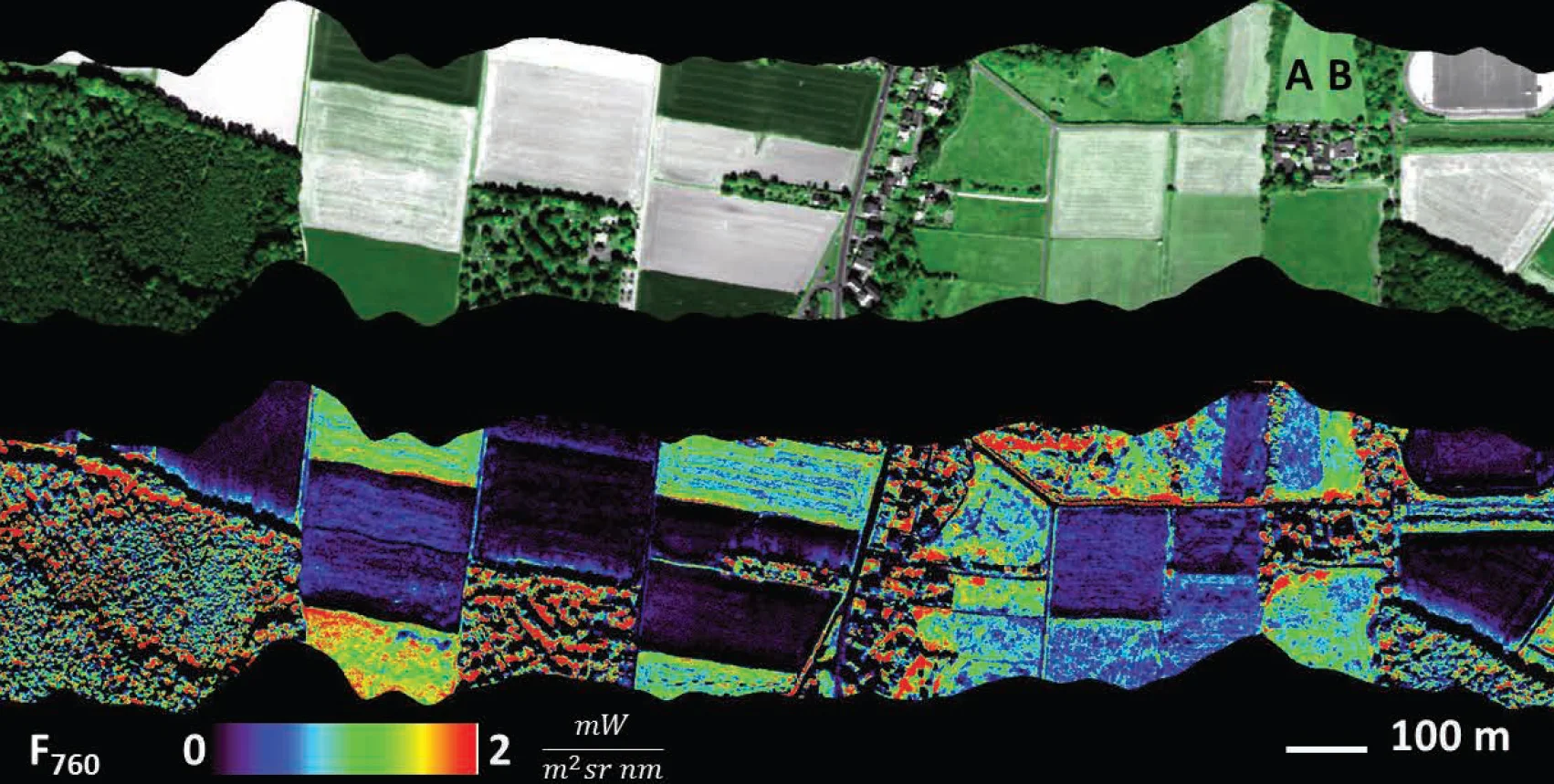
SIF vs Other Metrics
7 minNDVI and related indices describe how a canopy looks. SIF measures what it is doing. The difference matters most exactly when it matters most, under stress.