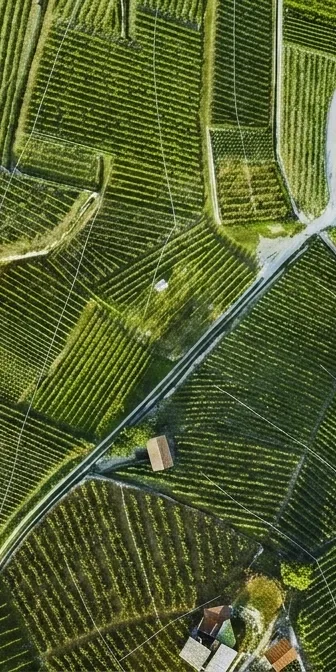
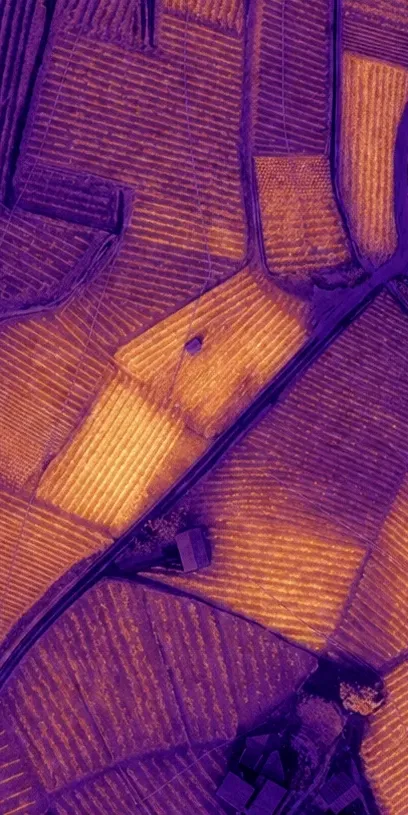
We see
what others can’t.
Floronics makes plant stress visible before damage occurs by directly measuring photosynthesis in real time.
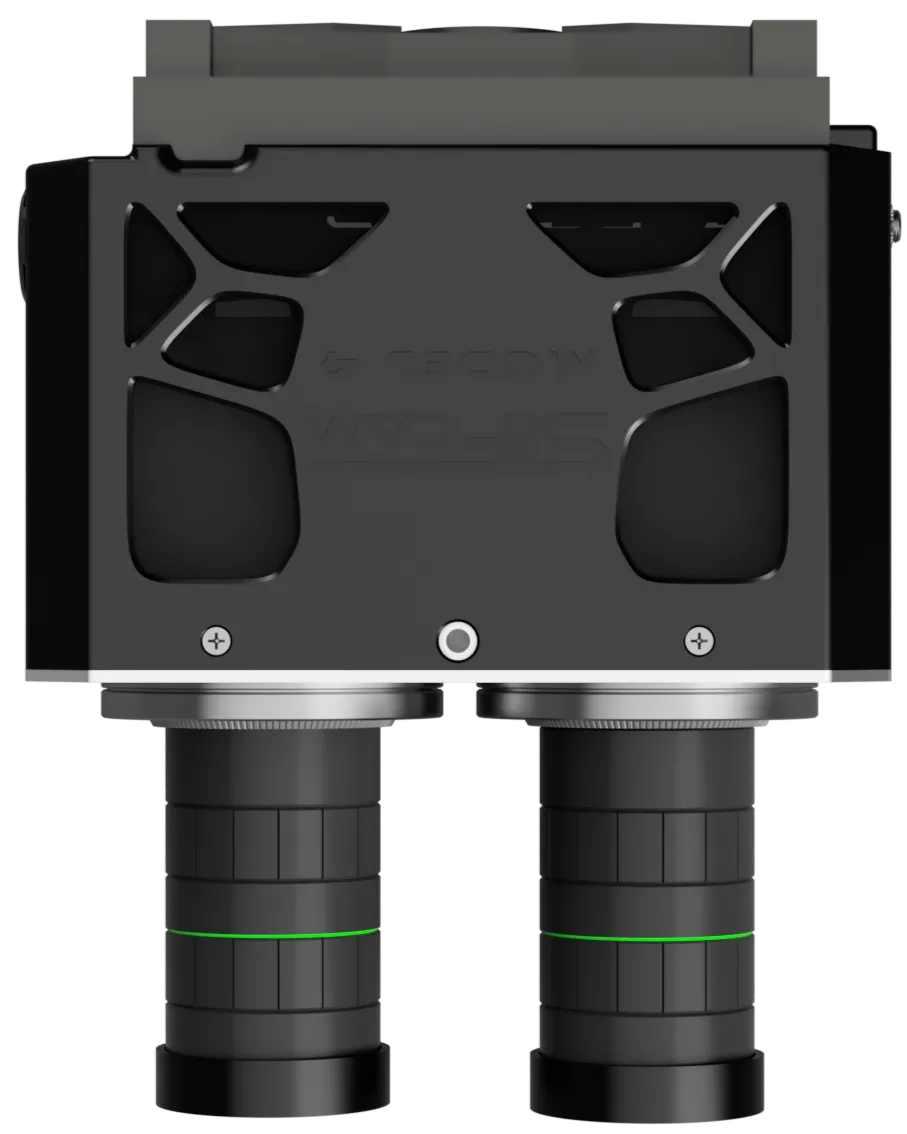
The first field-deployable camera for real-time photosynthesis imaging under natural sunlight.
Backed by leading research & innovation partners






Plant stress stays invisibleuntil it’s already expensive.
Every year, 20–40% of global crop yield is lost to pests, drought, disease and fungi[1]. Most of it could be prevented — if we could see it earlier.

Photosynthesis drops immediately.
As soon as stress occurs, photosynthesis declines. This is the earliest signal of plant health. Measurement systems for solar induced fluorescence (SIF) and hyperspectral analysis can detect this change in real time. But they are costly to operate, making them impractical for continuous field use.
The plant still looks fine.
For days to weeks, the plant shows no visible change. Photosynthesis is already reduced, but the canopy still appears healthy. Without practical large scale sensing, this early stress goes unnoticed.
NDVI starts to respond.
As chlorophyll content decreases, multispectral imaging begins to detect the stress. Indices such as NDVI can be captured from drones or satellites across large areas. This makes detection scalable, but the stress has already been present for a long time.
Now the damage becomes visible.
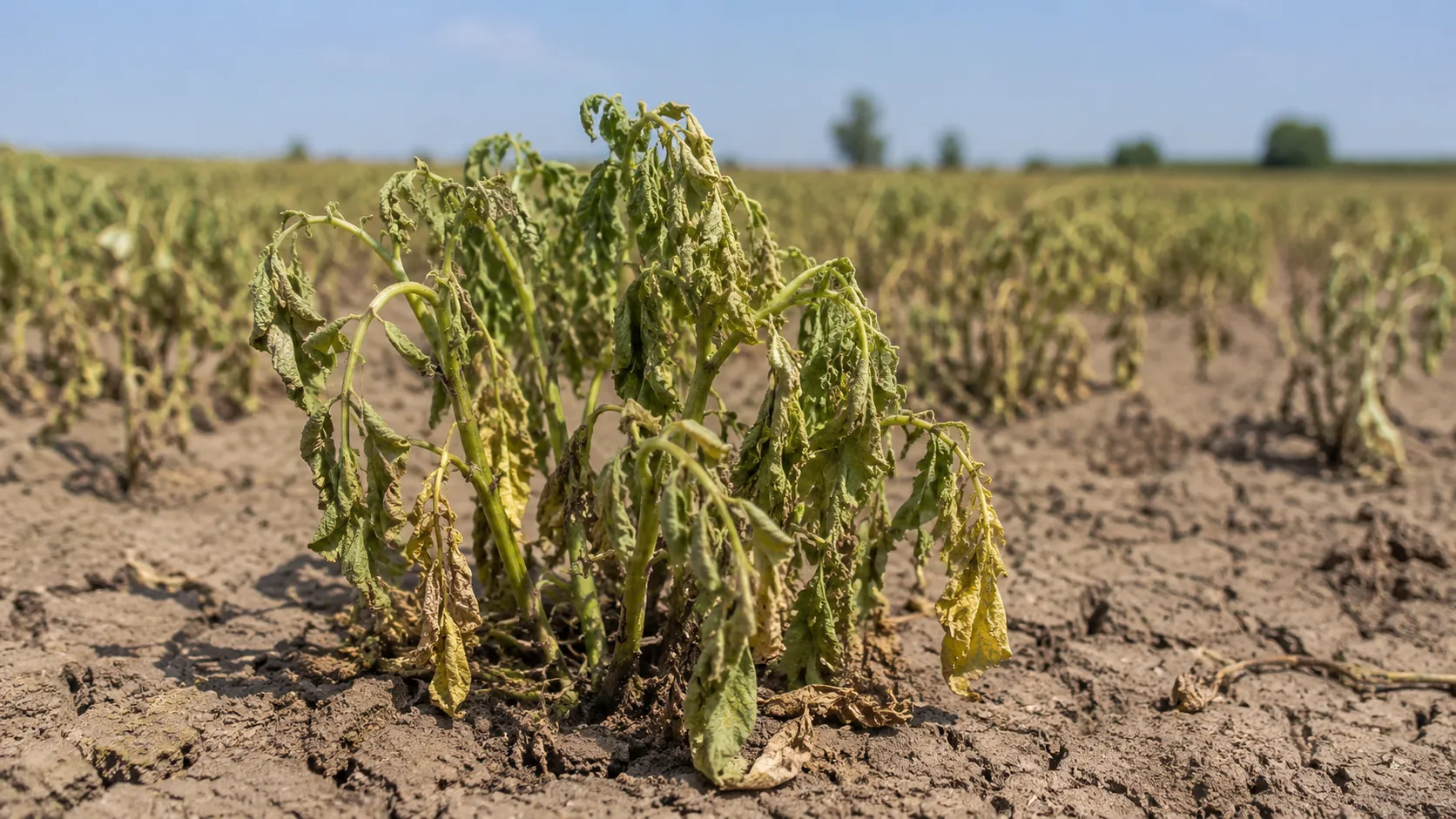
Damage can now be seen through manual field inspection. Leaves begin to wilt, yellow, or brown. By the time stress is visible, the plant has already lost performance.
Yield is already lost.
What started as an invisible drop in photosynthesis has turned into irreversible yield loss.
Plant stress stays invisibleuntil it’s already expensive.
Every year, 20–40% of global crop yield is lost to pests, drought, disease and fungi[1]. Most of it could be prevented — if we could see it earlier.
Photosynthesis drops immediately.
As soon as stress occurs, photosynthesis declines. This is the earliest signal of plant health. Measurement systems for solar induced fluorescence (SIF) and hyperspectral analysis can detect this change in real time. But they are costly to operate, making them impractical for continuous field use.
The plant still looks fine.
For days to weeks, the plant shows no visible change. Photosynthesis is already reduced, but the canopy still appears healthy. Without practical large scale sensing, this early stress goes unnoticed.
NDVI starts to respond.
As chlorophyll content decreases, multispectral imaging begins to detect the stress. Indices such as NDVI can be captured from drones or satellites across large areas. This makes detection scalable, but the stress has already been present for a long time.
Now the damage becomes visible.
Damage can now be seen through manual field inspection. Leaves begin to wilt, yellow, or brown. By the time stress is visible, the plant has already lost performance.
Yield is already lost.
What started as an invisible drop in photosynthesis has turned into irreversible yield loss.
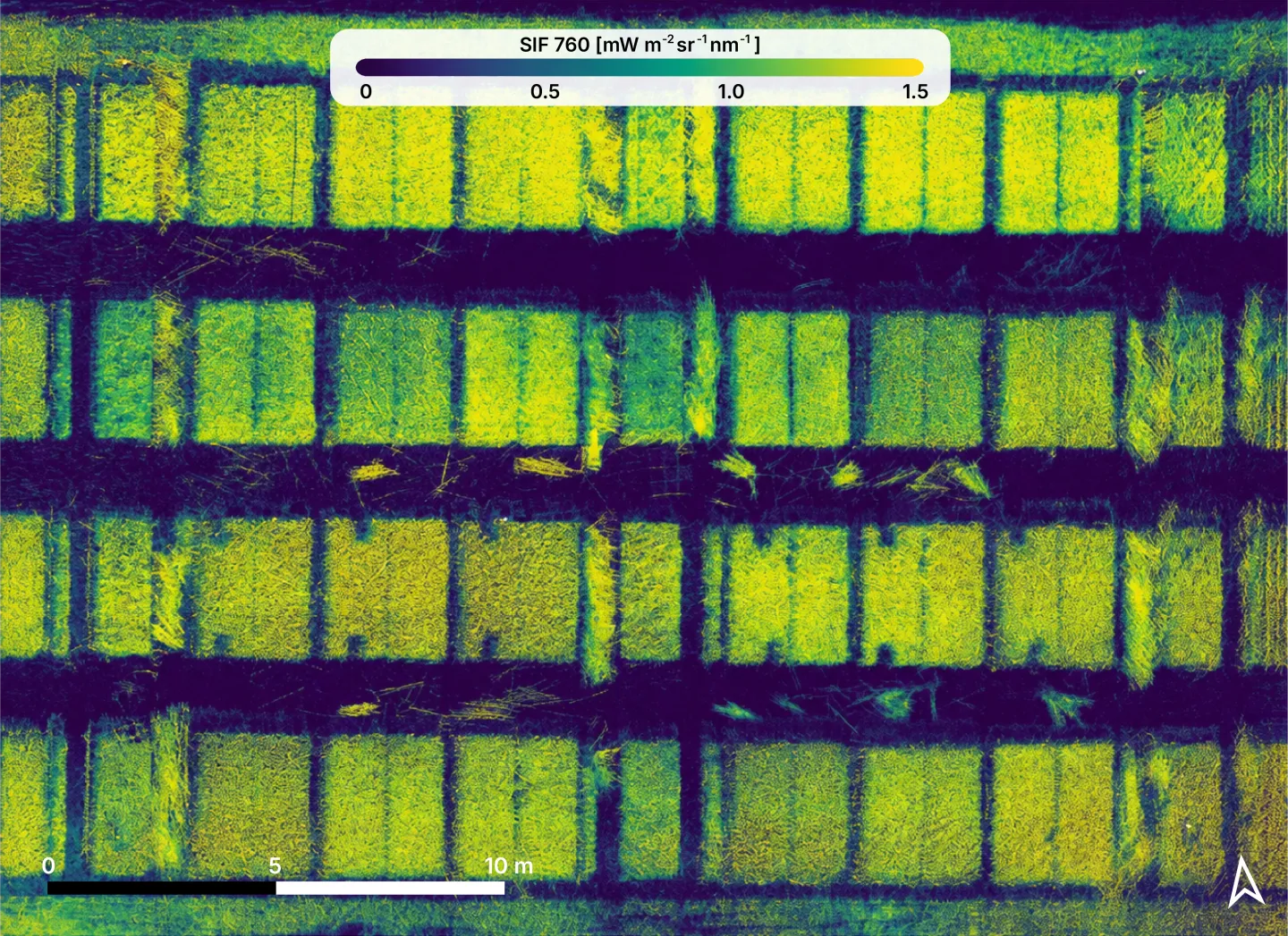
Image by Saja Salattna, Forschungszentrum Jülich
Making plant physiology
directly visible.
Plants emit a faint light signal during photosynthesis called solar induced fluorescence (SIF). Until now, capturing this signal at scale required complex and expensive airborne systems. Floronics makes SIF imaging practical and cost effective in real field conditions.
- Detect stress before visible symptoms
- Direct measurement of photosynthesis
- High resolution monitoring in the field
- Cost effective field deployment
- Scalable from lab to field

'%3e%3cpath%20style='%20stroke:none;fill-rule:nonzero;fill:%23ffffff;fill-opacity:1;'%20d='M%200.75%2062.730469%20L%205.816406%2056.25%20L%2043.285156%2056.25%20C%2050.632812%2056.25%2054.210938%2053.6875%2054.210938%2048.699219%20C%2054.210938%2042.4375%2049.003906%2041.648438%2040.078125%2041.648438%20L%2020.808594%2041.648438%20C%208.742188%2041.648438%203.105469%2037.019531%203.105469%2028.683594%20C%203.105469%2020.347656%208.953125%2015.082031%2022.085938%2015.082031%20L%2060.699219%2015.082031%20L%2055.699219%2021.632812%20L%2021.519531%2021.632812%20C%2014.242188%2021.632812%2010.59375%2024.195312%2010.59375%2029.183594%20C%2010.59375%2035.238281%2015.660156%2035.945312%2024.726562%2035.945312%20L%2043.996094%2035.945312%20C%2055.628906%2035.945312%2061.625%2040.144531%2061.625%2048.761719%20C%2061.625%2057.878906%2055.847656%2062.722656%2042.714844%2062.722656%20L%200.75%2062.722656%20Z%20M%200.75%2062.730469%20'/%3e%3c/g%3e%3cpath%20style='%20stroke:none;fill-rule:nonzero;fill:%23ffffff;fill-opacity:1;'%20d='M%2068.113281%2032.351562%20L%2075.820312%2032.351562%20L%2075.820312%2062.730469%20L%2068.113281%2062.730469%20Z%20M%2068.113281%2032.351562%20'/%3e%3cpath%20style='%20stroke:none;fill-rule:nonzero;fill:%23ffffff;fill-opacity:1;'%20d='M%2092.382812%2042.507812%20L%2092.382812%2062.730469%20L%2084.675781%2062.730469%20L%2084.675781%2015.089844%20L%20134.058594%2015.089844%20L%20128.992188%2021.640625%20L%2092.382812%2021.640625%20L%2092.382812%2036.382812%20L%20131.421875%2036.382812%20L%20126.714844%2042.507812%20Z%20M%2092.382812%2042.507812%20'/%3e%3cpath%20style='%20stroke:none;fill-rule:nonzero;fill:%23ffffff;fill-opacity:1;'%20d='M%20152.171875%2062.730469%20C%20142.933594%2062.730469%20136.144531%2056.625%20136.144531%2048.570312%20C%20136.144531%2040.511719%20142.933594%2034.9375%20152.171875%2034.9375%20L%20169.785156%2034.9375%20L%20166.832031%2038.761719%20L%20152.179688%2038.761719%20C%20146.726562%2038.761719%20140.652344%2041.832031%20140.652344%2048.769531%20C%20140.652344%2055.707031%20146.773438%2058.945312%20154.644531%2058.945312%20L%20169.792969%2058.945312%20L%20166.839844%2062.722656%20L%20152.171875%2062.722656%20Z%20M%20152.171875%2062.730469%20'/%3e%3cpath%20style='%20stroke:none;fill-rule:nonzero;fill:%23ffffff;fill-opacity:1;'%20d='M%20181.3125%2062.730469%20L%20184.058594%2058.953125%20L%20203.460938%2058.953125%20L%20190.640625%2039.679688%20L%20175.027344%2062.730469%20L%20169.699219%2062.730469%20L%20187.765625%2036.269531%20C%20188.34375%2035.394531%20189.34375%2034.5625%20190.722656%2034.5625%20C%20192.097656%2034.5625%20193.054688%2035.304688%20193.675781%2036.269531%20L%20211.488281%2062.730469%20L%20181.304688%2062.730469%20Z%20M%20181.3125%2062.730469%20'/%3e%3cg%20clip-rule='nonzero'%20clip-path='url(%237a7b804c63)'%3e%3cpath%20style='%20stroke:none;fill-rule:nonzero;fill:%23ffffff;fill-opacity:1;'%20d='M%20256.378906%2062.730469%20L%20248.59375%2040.378906%20L%20239.308594%2061.359375%20C%20238.640625%2062.855469%20237.6875%2063.101562%20236.644531%2063.101562%20C%20235.597656%2063.101562%20234.644531%2062.855469%20233.976562%2061.359375%20L%20224.691406%2040.378906%20L%20216.863281%2062.730469%20L%20212.453125%2062.730469%20L%20221.617188%2036.6875%20C%20222.070312%2035.316406%20223.027344%2034.570312%20224.195312%2034.570312%20C%20225.359375%2034.570312%20226.269531%2035.238281%20226.769531%2036.234375%20L%20236.722656%2058.085938%20L%20246.671875%2036.234375%20C%20247.085938%2035.238281%20248.003906%2034.570312%20249.214844%2034.570312%20C%20250.425781%2034.570312%20251.335938%2035.316406%20251.835938%2036.6875%20L%20260.867188%2062.730469%20L%20256.367188%2062.730469%20Z%20M%20256.378906%2062.730469%20'/%3e%3c/g%3e%3cpath%20style='%20stroke:none;fill-rule:nonzero;fill:%23ffffff;fill-opacity:1;'%20d='M%2052.886719%2015.097656%20L%20260.867188%2015.097656%20L%20260.867188%2021.675781%20L%2052.886719%2021.675781%20Z%20M%2052.886719%2015.097656%20'/%3e%3cpath%20style='%20stroke:none;fill-rule:nonzero;fill:%23ffffff;fill-opacity:1;'%20d='M%2068.21875%2020.222656%20L%2075.722656%2020.222656%20L%2075.722656%2027.214844%20L%2068.21875%2027.214844%20Z%20M%2068.21875%2020.222656%20'/%3e%3c/g%3e%3c/svg%3e)
The world’s first snapshot
photosynthesis camera.
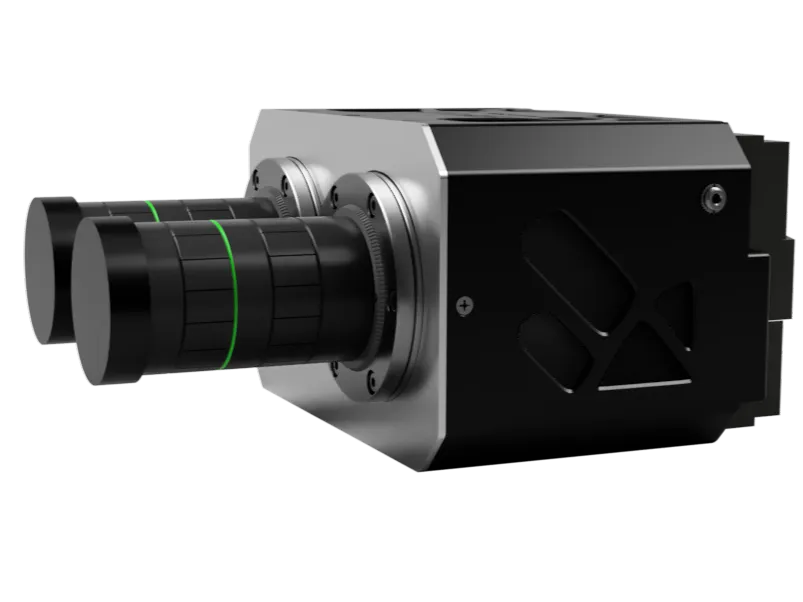
Advanced optics.
Field-grade hardware.
Built for those who look
beyond visible symptoms.
New to SIF?
Explore the science behind Floronics.
A structured knowledge hub for Solar-Induced Fluorescence, field photosynthesis imaging, and the SIFcam technology.
Open Learn Platform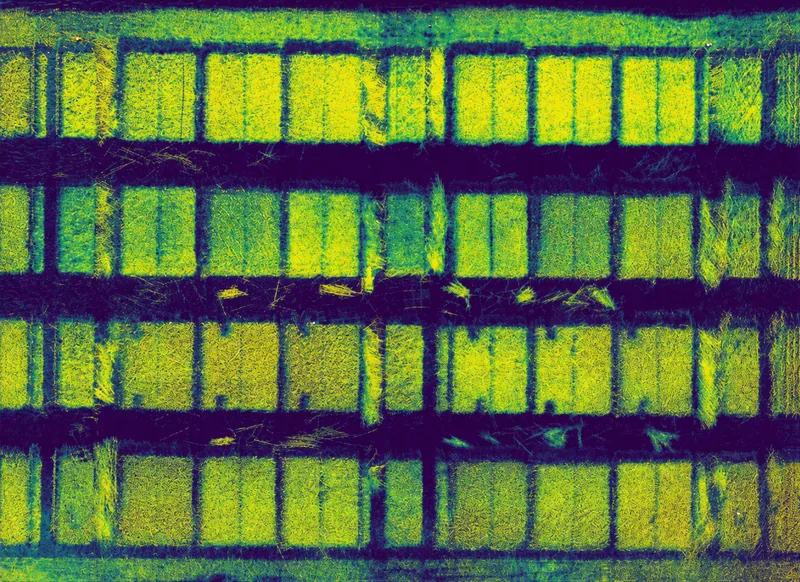
What is SIF?
7 minSolar-Induced Fluorescence is the faint light that every photosynthesising leaf emits under sunlight. It is the most direct optical signal of active photosynthesis measurable from a distance.
How SIFcam Works
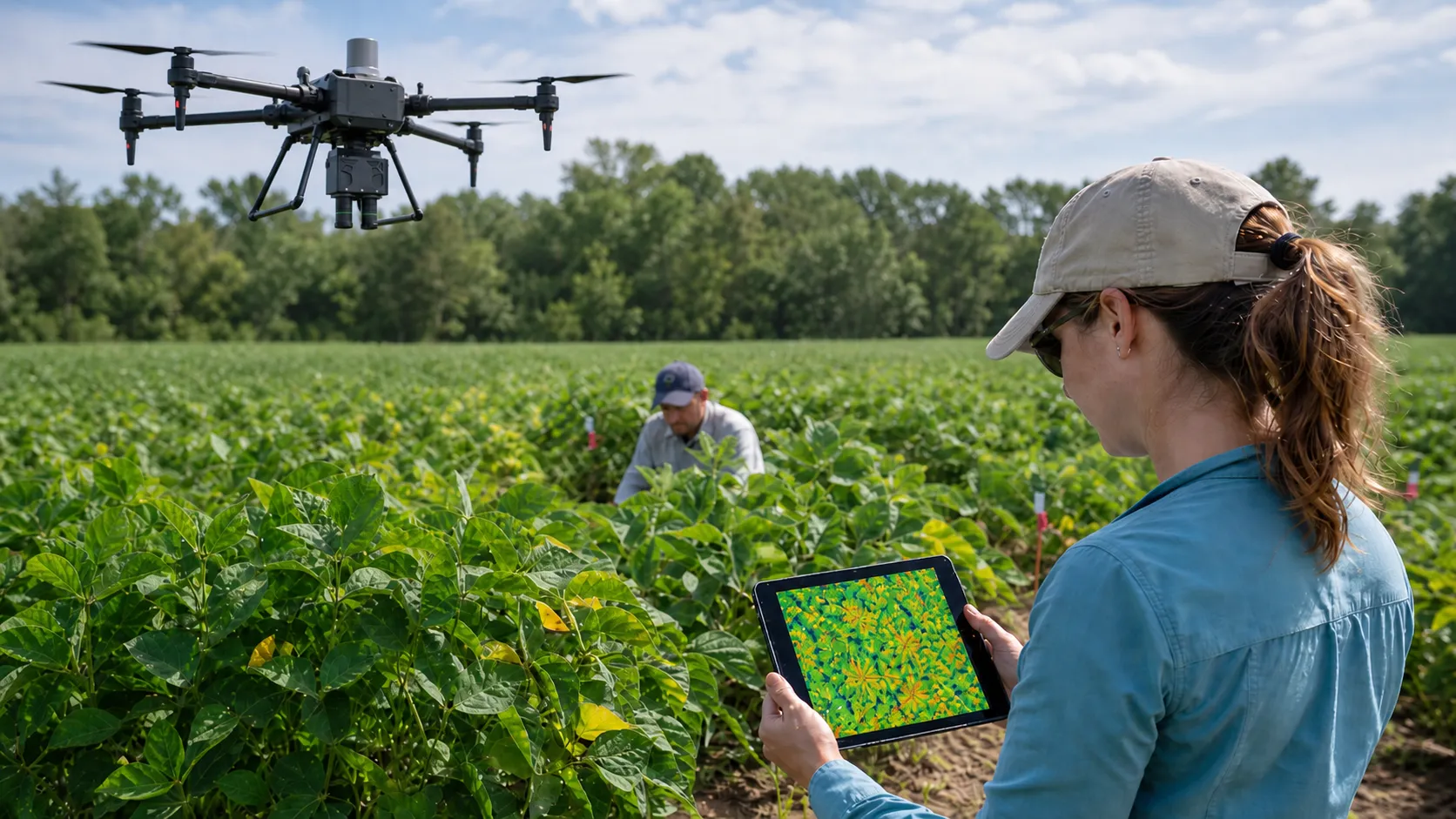
7 minSIFcam measures solar-induced fluorescence in the oxygen A-band from a drone, and turns a flight of snapshot images into a single calibrated SIF map.
Early Stress Detection
6 minBy the time a crop looks stressed, weeks of yield potential are often already lost. SIF detects the physiological decline that comes first.
Why Floronics is different.
Direct. Early. Scalable.
- Measures photosynthesis directly
- Earlier than visual stress signals
- High-resolution spatial imaging
- Scalable field deployment
- Fully integrated platform
Indirect. Slow. Limited.
- Indirect proxies
- Late detection
- Low resolution
- Manual workflows
- Fragmented tools
Built by science, engineering
and ambition.




Juliane Bendig, PhD
UAV integration · Data analytics

Andreas Müller, PhD
Business development

Prof. Uwe Rascher
Leading SIF expert · FZJ

Prof. Jens Bongatz
Multispectral expert · Hochschule Koblenz
Join us in shaping plant monitoring.
Have a question, a use case, or want to partner with us? Send us a message and we’ll get back to you shortly.